

By Kelly Miller
Winter squash is a symbol of the autumn harvest and the source of seasonal favorites throughout fall and winter. Gardeners must grow winter squash with some patience, as these plants have longer growing seasons than their summer squash cousins. The rewards are worth the wait though, in the form of hearty, strong-skinned squashes and pumpkins that will supply fresh ingredients for savory meals all winter long.
Here are the essential facts on growing, harvesting, and storing winter squash.
What Is Winter Squash?
Squashes are botanically classified in the genus Cucurbita. This genus includes five domesticated winter squash species. All are grown as annual plants and they are native to the Americas. These species are:
- Cucurbita pepo – this species includes acorn, delicata, patty pan and zucchini squash.
- Cucurbita moschata – butternut squash.
- Cucurbita maxima – includes hubbard, kabocha, and turban squash.
- Cucurbita argyrosperma – cushaw squash.
- Cucubita ficifolia – the fig-leaf gourd.
Summer squashes include zucchini and yellow squash. The fruits of summer squash are harvested during an immature phase of development. They have thin skin and can’t be stored fresh for more than a few weeks.
Winter squashes develop strong, rigid skins. Compared to summer squash, they grow more slowly and can be stored for a longer period of time.

Note: winter squashes come in many shapes and sizes. Most varieties have similar care needs. The main differences involve spacing, days till harvest, and the appearance of mature fruits when they are ready to be harvested.
A Few of the Most Familiar Winter Squash
Spaghetti squash (Cucurbita pepo)
Spaghetti squash produces large, yellow fruits. When cooked, the fruit forms long, spaghetti-like ribbons. Grow spaghetti squash for a homegrown, low-carb alternative to wheat pasta.

Acorn squash (Cucurbita pepo)
Acorn squashes are green and grapefruit-sized. Bake them, halve them, add butter and maple syrup, and you have two servings of a sweet and savory side dish.

Butternut squash (Cucurbita moschata)
Butternut squashes are large, tan, and bell-shaped. They have a sweet, nutty flavor and a smooth texture. Butternut squash is versatile, providing a unique ingredient for soups, curries, raviolis, and baked goods.

Pumpkin (Cucurbita pepo)
“Pumpkin” isn’t a scientific term, and the word is sometimes used as a synonym for “squash.” In North America, pumpkin usually refers to orange, round varieties of Cucurbita pepo.
Modern Americans know pumpkin as a pie filling and Halloween decoration, but pumpkins are delicious in all sorts of recipes, like baked goods, soups, pasta sauces, and smoothies. Native Americans had already used pumpkins for thousands of years before the arrival of Europeans.

Pumpkins also can be found in an array of shapes and sizes beyond just the familiar orange. You can take a closer look at some of the different pumpkins that are available to grow at home in our article 10 Types of Pumpkins to Grow.
If you’re looking to try some of the more unusual varieties of winter squash, Hubbard, ‘Carnival’, and ‘Delicata’ are quite popular.

Planting Winter Squash: Where, When, and How
Winter squash grows well throughout most of North America, from USDA zones 3 to 11.
The most common method for starting winter squash plants is direct sowing, i.e., planting seeds directly into the ground. You can begin sowing after winter’s final frost. Sow seeds 1” (2.5 cm) deep. You can continue planting throughout spring and early summer, as long as the number of days till harvest will pass before heavy frosts begin in fall.

In cold regions, some gardeners prefer to start seeds indoors to grow winter squash seedlings for the vegetable garden. This gives seedlings time to start developing while outdoor temperatures are still too frosty. Start seeds indoors around three weeks before the expected last frost date.
Note that squash seedlings are sensitive to transplanting. To minimize contact, use biodegradable starter pots that can be put into the ground without disturbing roots. Prior to planting, harden off seedlings by putting them outdoors in the daytime only for one week.
Plant winter squash in full sun in rich, well-draining soil. Before planting, stir compost or well-rotted manure deep into the soil to provide the roots with more nutrients.
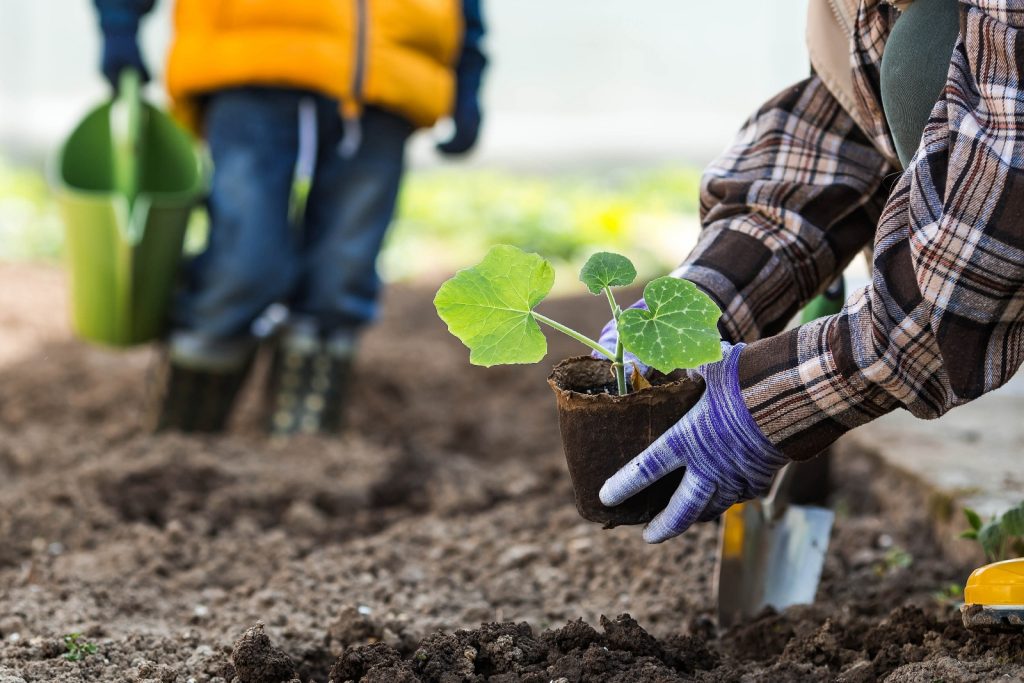
Most winter squash are vining plants that require a lot of space. Larger varieties, such as giant pumpkins, should be planted at least 5 ft (1.5 m) apart. Vines sprawl in multiple directions, and a mature pumpkin plant requires up to 50 sq ft (4.6 sq m).

The vining growth can be guided, or raised on trellises, to use space efficiently. Smaller varieties, such as acorn squash, should be planted 3 ft (0.9 m) apart. Always check seed pack instructions on spacing, since requirements vary widely.

Winter Squash Plant Care
Watering Winter Squash Plants
Winter squash requires well-draining soil that’s kept moist but not soggy. In dry weather, water thoroughly once or twice weekly. Maintain a fresh layer of mulch around the roots to improve moisture retention and block weed growth.

Fertilizer for Winter Squash
Winter squash plants are “heavy feeders” that require lots of nutrients. Along with starting the plants in nutrient-rich soil, add more nutrients after the first fruits appear. This may be in the form of organic matter, such as compost, or a balanced 10-10-10 fertilizer product.
Winter Squash Pollination
Squash plants are monoecious, which means they produce separate male and female flowers. Only female flowers produce fruits, and this occurs only after they’ve received pollen from a male flower. The main pollinators for squash plants are bees.

Squash plants grow best in pollinator-friendly gardens that are full of native plants and high-pollen flowers.
If your garden doesn’t attract many bees, you can also pollinate winter squash plants by hand, using a paintbrush to transport pollen from male to female flowers.

Harvesting Winter Squash
Winter squash harvests begin 80–100 days after planting, although some varieties mature faster than others. Most harvesting occurs between late September and late October. Each plant produces 1–12 fruits.
Unlike summer squash, which are harvested during an immature development stage, winter squashes shouldn’t be picked until they’re mature.
Winter squash is ready to harvest when it’s reached its mature coloration (which varies across varieties) and its rind is firm. Test ripeness with the “thumbnail test.” If your nail can’t break the surface of the skin, then the fruit is probably ripe.

Harvesting best practices include:
- Use a sharp blade. Remove fruits with a clean cut. Don’t try to yank them off by hand, as this process often tears the flesh and reduces storage life.
- The leaves and stems of some squash plants can be prickly. Wear garden gloves to protect your hands while harvesting.
- Leave at least two inches of stem.
- If any squashes are bruised or torn, eat them first. Undamaged squashes are better for storing.
- It’s helpful to leave the fruits on the vine as long as possible. Fully matured squashes taste better and store longer. However, harvesting should occur before the first hard frost, which damages fruits and reduces their storage lives.
Curing and Storing Winter Squash
Many winter squashes require curing. “Curing” refers to putting squash in warm, dry, ventilated conditions for one to two weeks. Curing releases excess water and concentrates the fruit’s sugars, thus improving flavor and extending storage life.
Depending on the weather, you can cure winter squash in the sunshine or in a protected area such as a greenhouse. After curing, keep squashes in a dry, ventilated space. The ideal storage temperatures are between 50–55° F (10–12° C).

Note that some varieties, such as butternut squash, can store for up to six months. Others, like acorn squash, have much shorter shelf lives and should not be cured.
Squash Plant Troubleshooting
Winter squash is easy to grow and doesn’t present many challenges. However, all Cucurbita plants are vulnerable to certain pests, especially squash bugs. Learn how to protect against an infestation in our guide: How to Control Squash Bugs.




0 Comments