
By Judy Stout
Generations of children have fond memories of sunny summer days sitting in a lawn or field making clover flower chains. It’s a fun and simple activity at any age, even if you’re not a “crafty” person. As long as you can make a loop, you can make a clover flower chain!
Steps for Making a Clover Flower Chain
Gather flowers with stems that are 3” (7cm) or longer. Cut or pinch the flower stems off at the base of the plant. You can place flowers in a cup of water until you’re ready to begin.
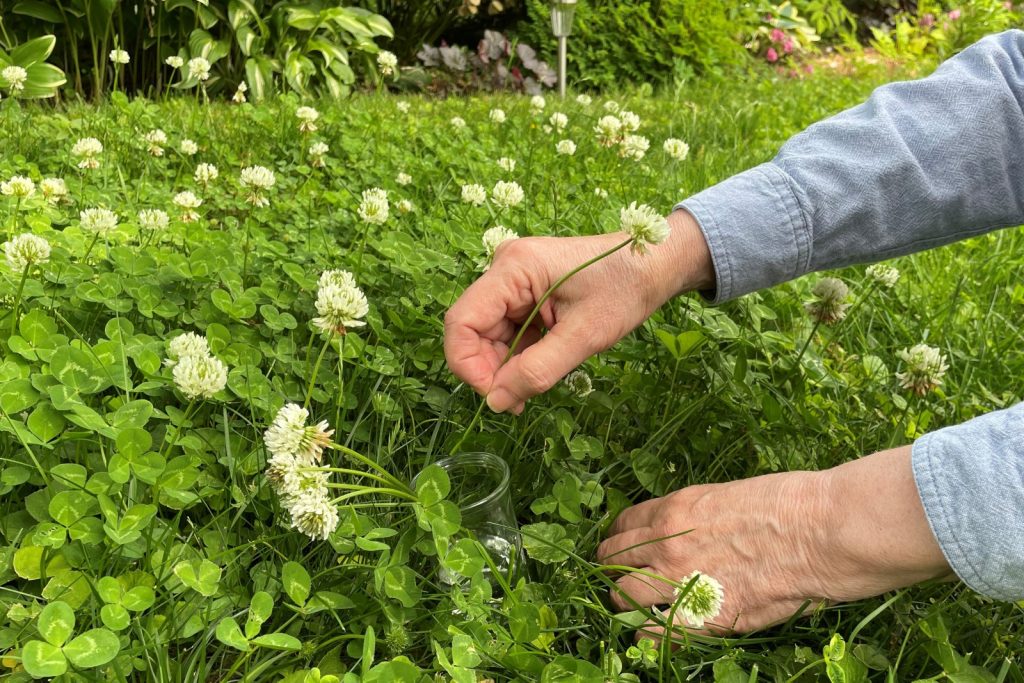
1. Start with a flower and make a loop in the stem to start the knot. Slip another flower stem through the loop and then tighten the knot.
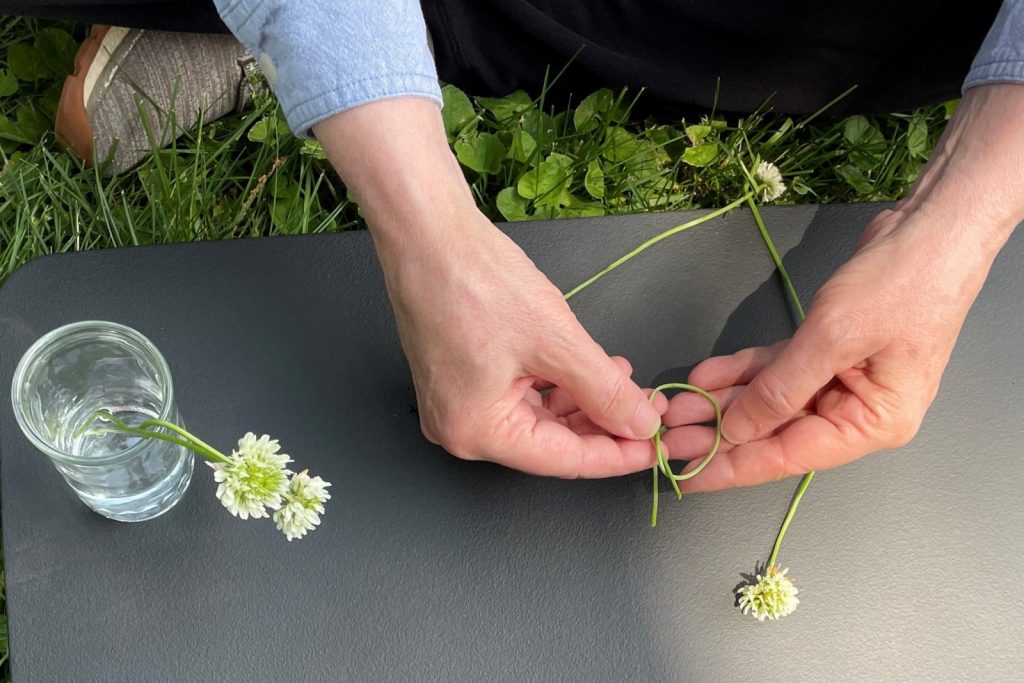
2. Glide the knot up to the base of the flower.
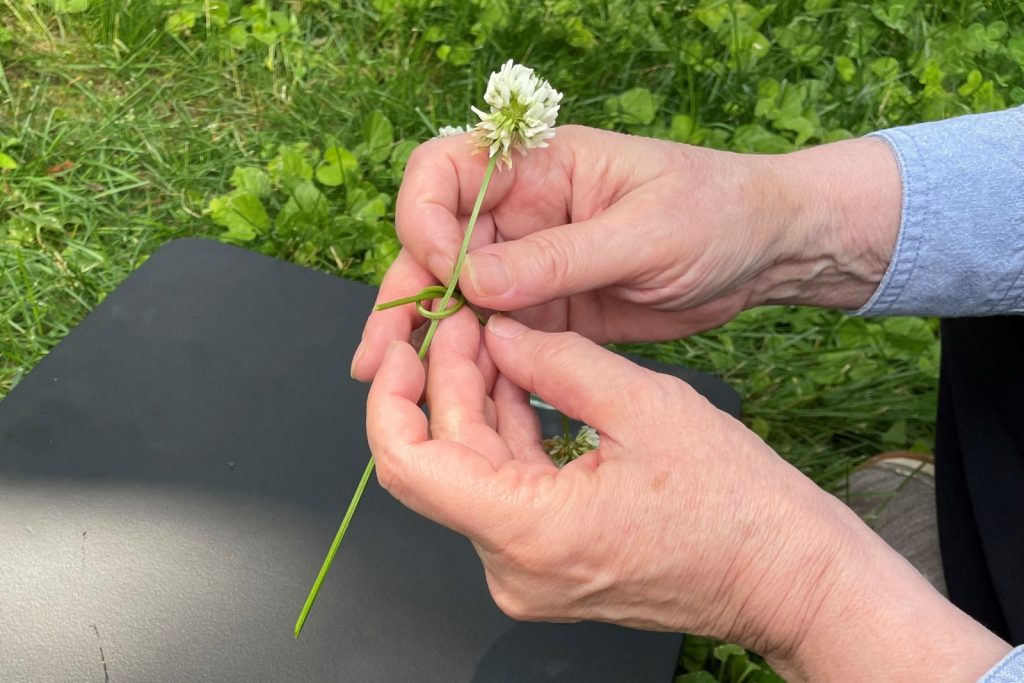
3. Continue adding flowers until the desired length is achieved.
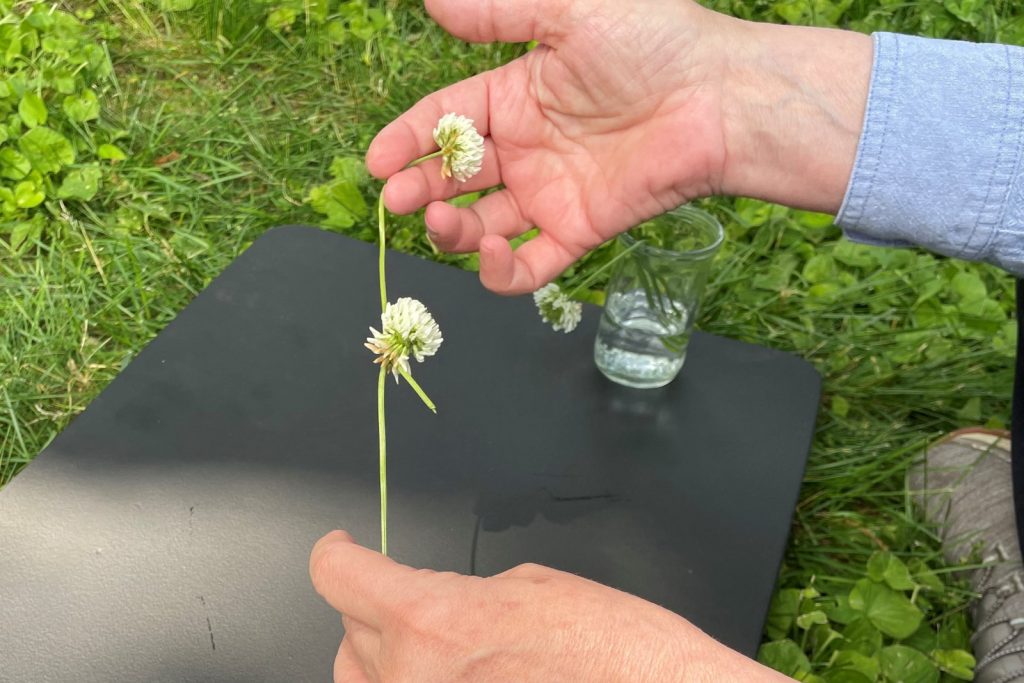
4. Continue to add as many flower stems as you need to get the length you want. Join the stem of the last flower to the first flower to complete the loop!
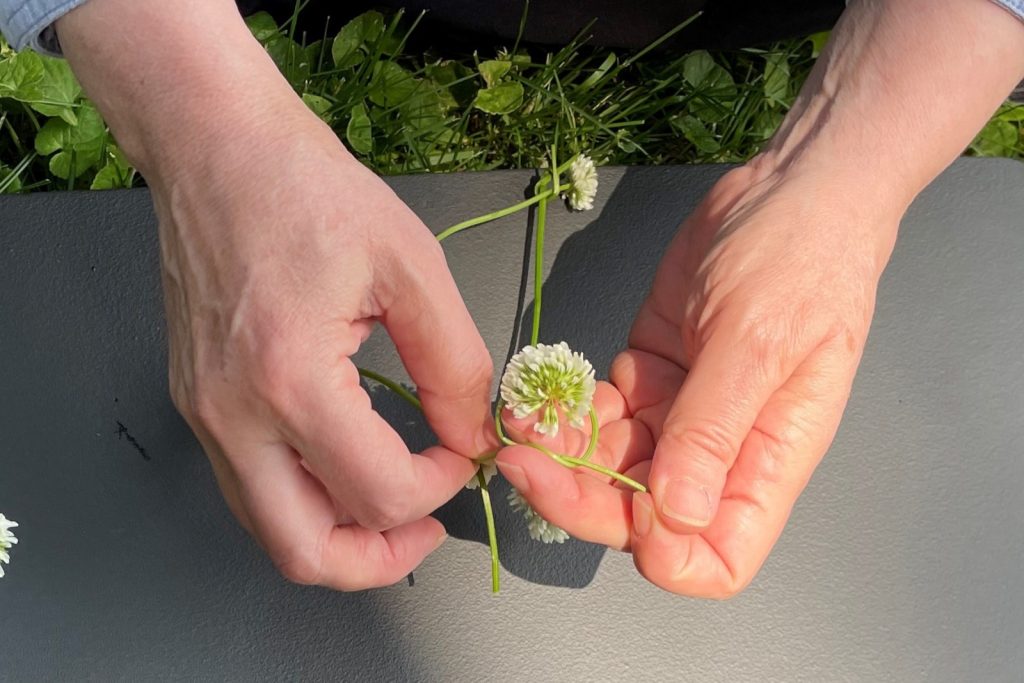
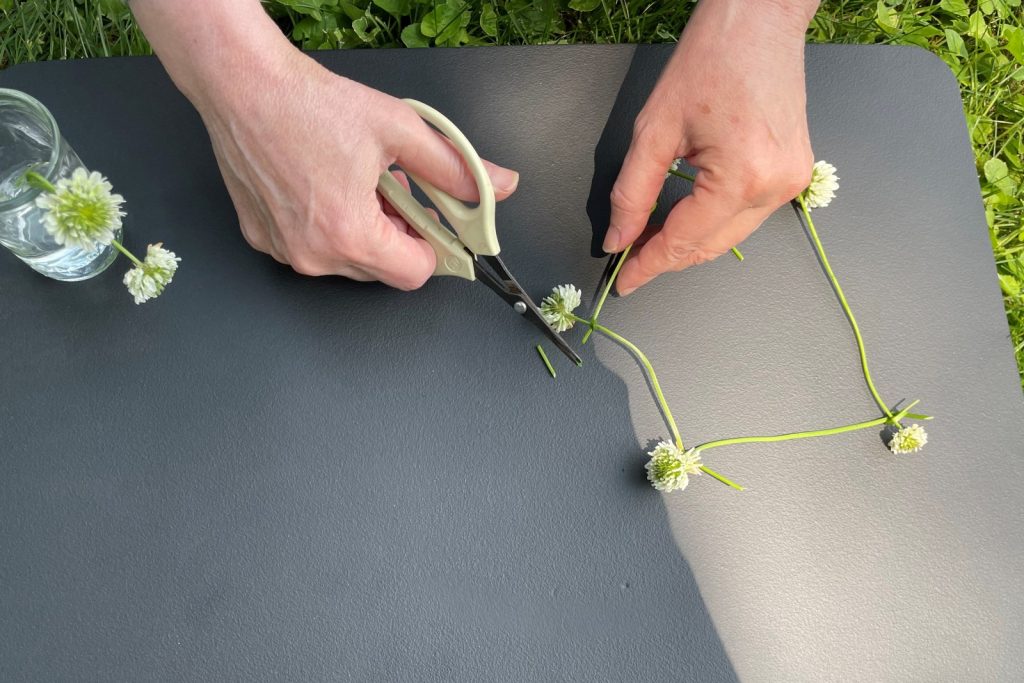
5. You can snip off any excess stem close to the knots for a tidier appearance.
Watch a Video on How to Make a Clover Flower Chain
See how easy it is to construct a clover flower chain in our video that shows every step of the process.
Ways to Use Clover Flower Chains
Clover chains aren’t just fun, they’re useful in a variety of ways. Here are just a few ideas for how to get creative with clover flower chains:
- Make a clover flower necklace, bracelet, or crown.
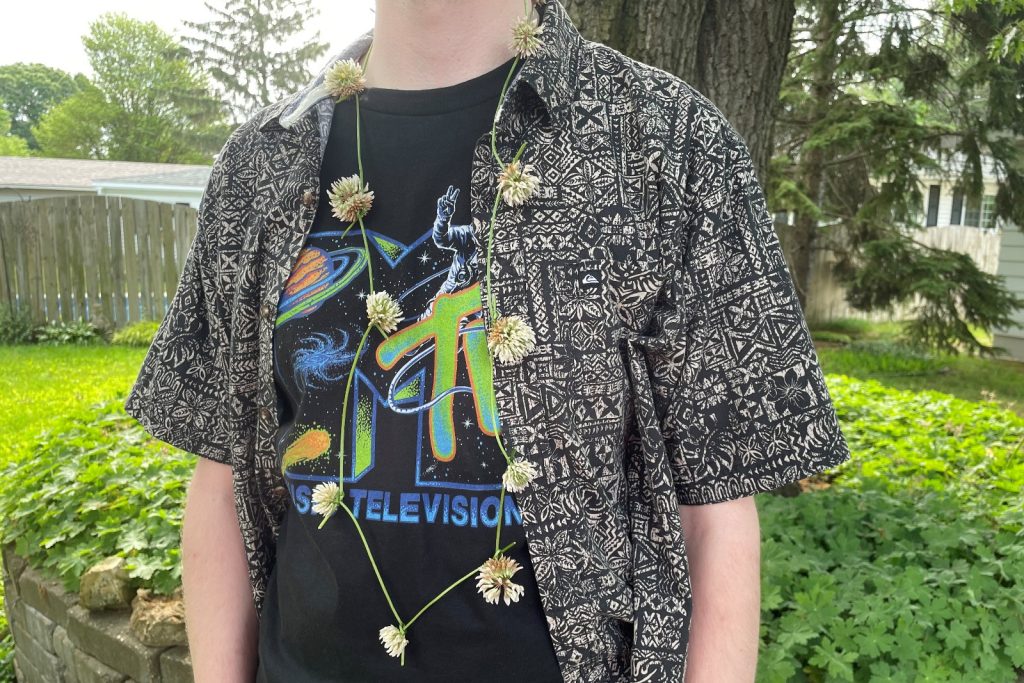
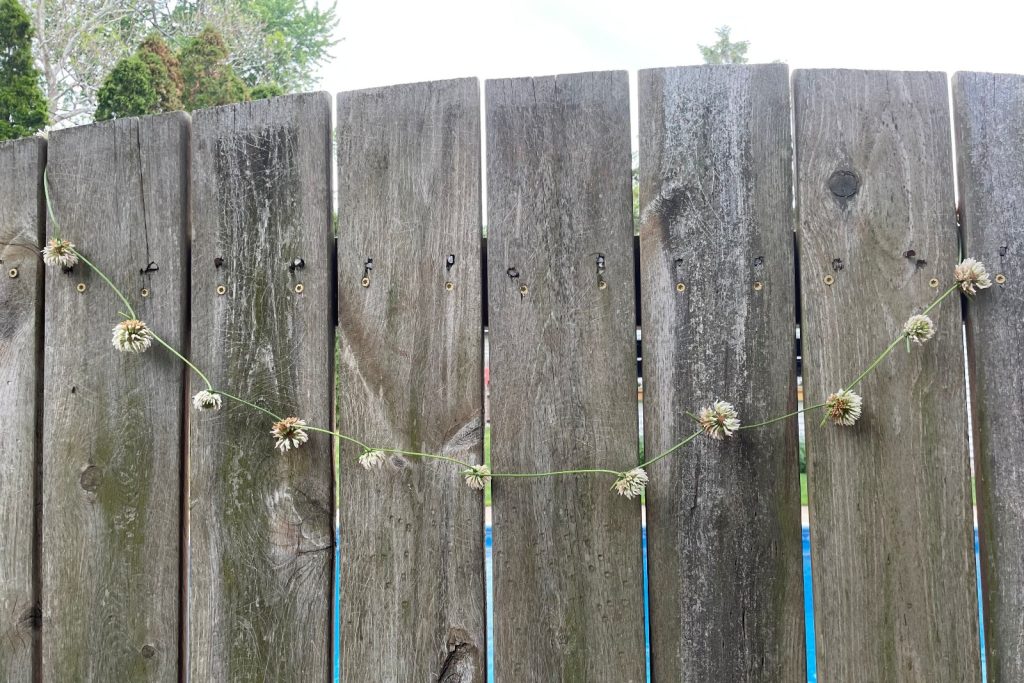
- Clover flower chains can be used to create a natural flower garland for decorating outdoor spaces. Drape clover flower chains along a fence, balcony, deck railing, or around a shrub.
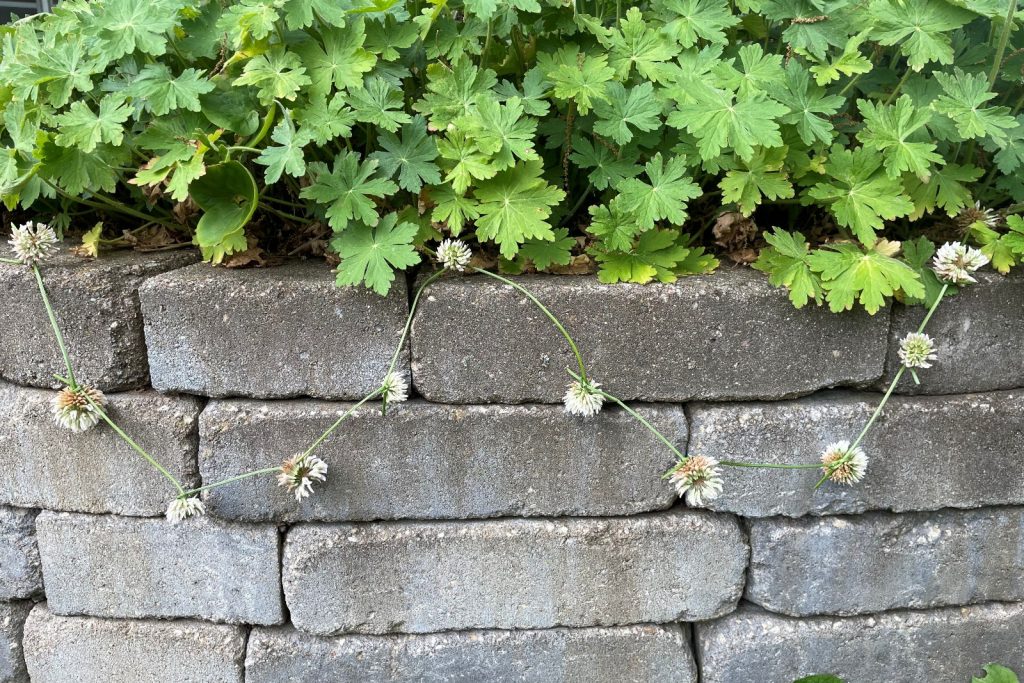
- Use them to decorate tables for a summer party or wedding, circling them around a centerpiece or along the edges of a table runner.
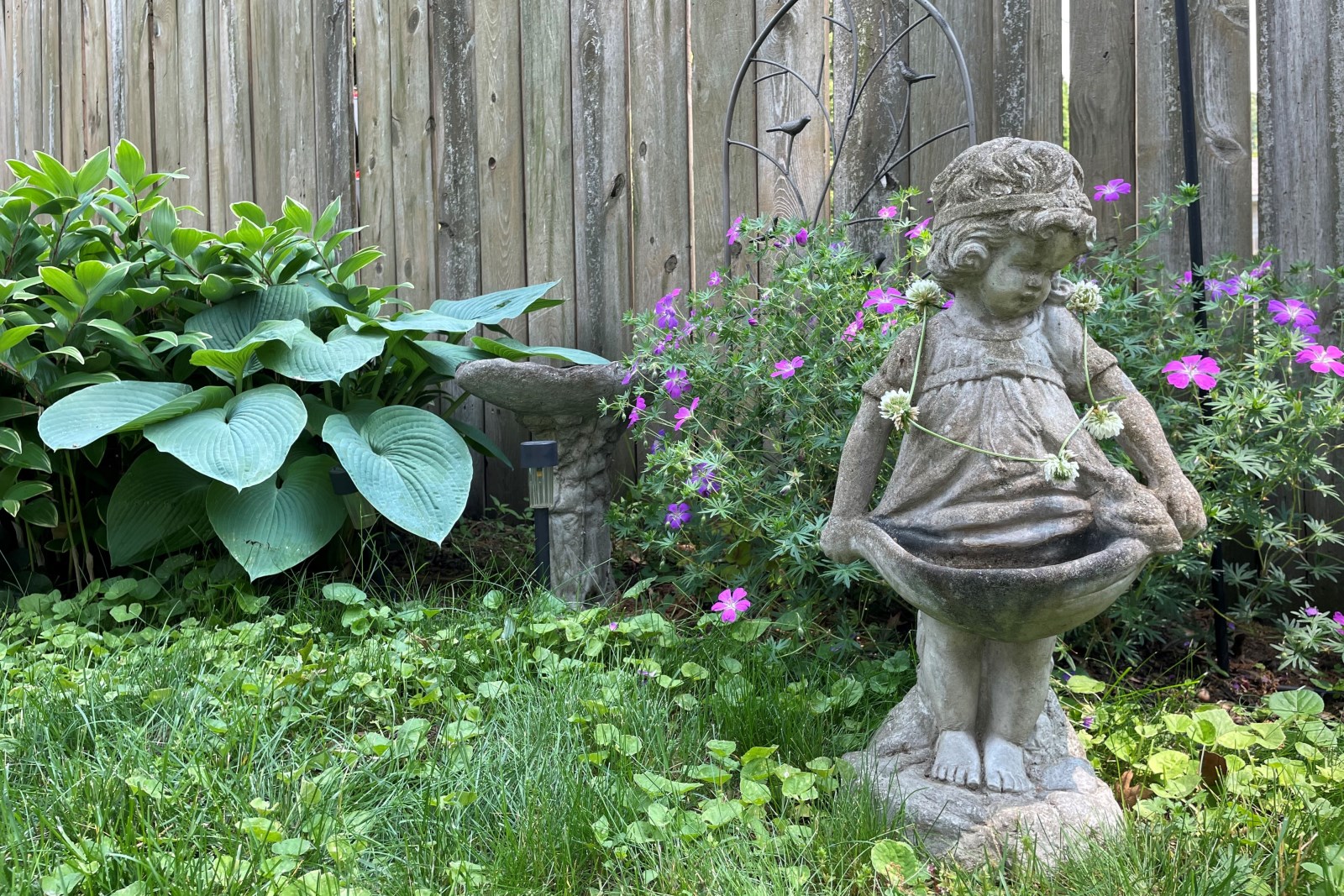
- Add a touch of whimsy to garden statuary by adding a crown or necklace to a figurine.
Where to Find a Clover Patch
There was a time when white Dutch clover was a welcome “guest” in a lawn and wasn’t considered a weed. Clover plants have the ability to take nitrogen from the atmosphere and lock it up, or what’s known as “fix” it, in their root systems. Over time this nitrogen will be released and in turn nourish the soil resulting in a healthier lawn overall.
Countless generations of farmers also understood the importance of clover in the environment, and many continue to plant clover as a cover crop to improve soil health, reduce weeds, and support pollinating insects.
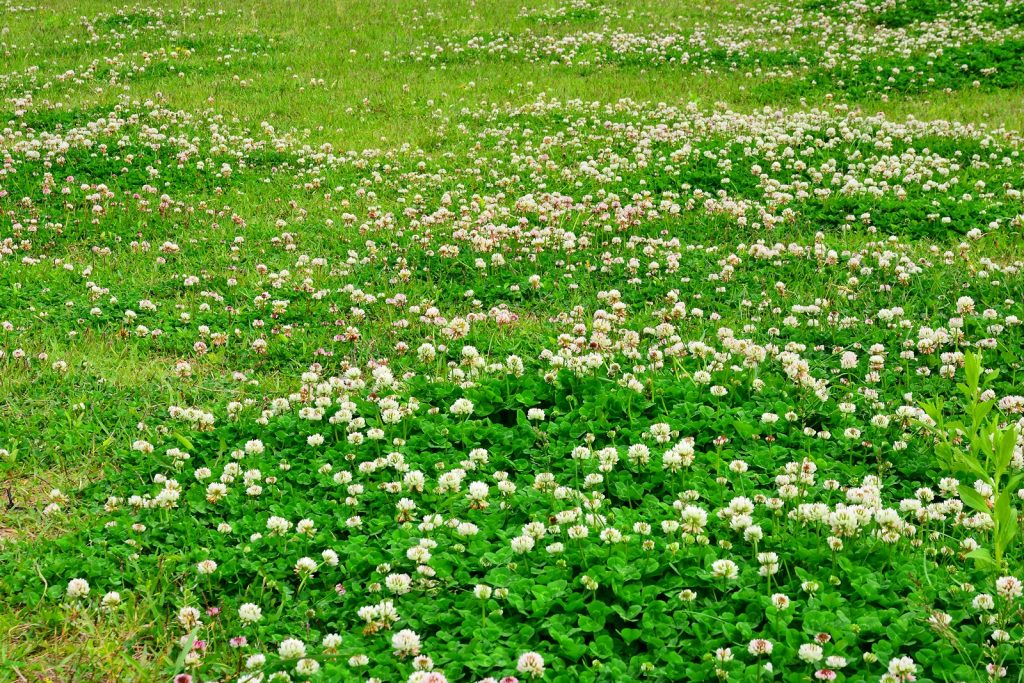
Unfortunately, with the development of broad-leaf lawn herbicides and marketing campaigns that convince homeowners that the best lawn is an all-turf lawn, clover patches aren’t as easy to find. Broadleaf herbicides kill clover plants so you may have to go further than your back yard to find clover flowers if you treat your lawn with herbicides.
Collecting Clover Flowers
Clover plants are easiest to spot in late spring or early summer when the flowers start blooming. Look for the white, globular flowers of Dutch clover in the grassy areas of public parks, schoolyards, abandoned lots, or even cemeteries.
If collecting away from home, take along a cup of water to put the flower stems in until you are ready to make your clover flower chain.
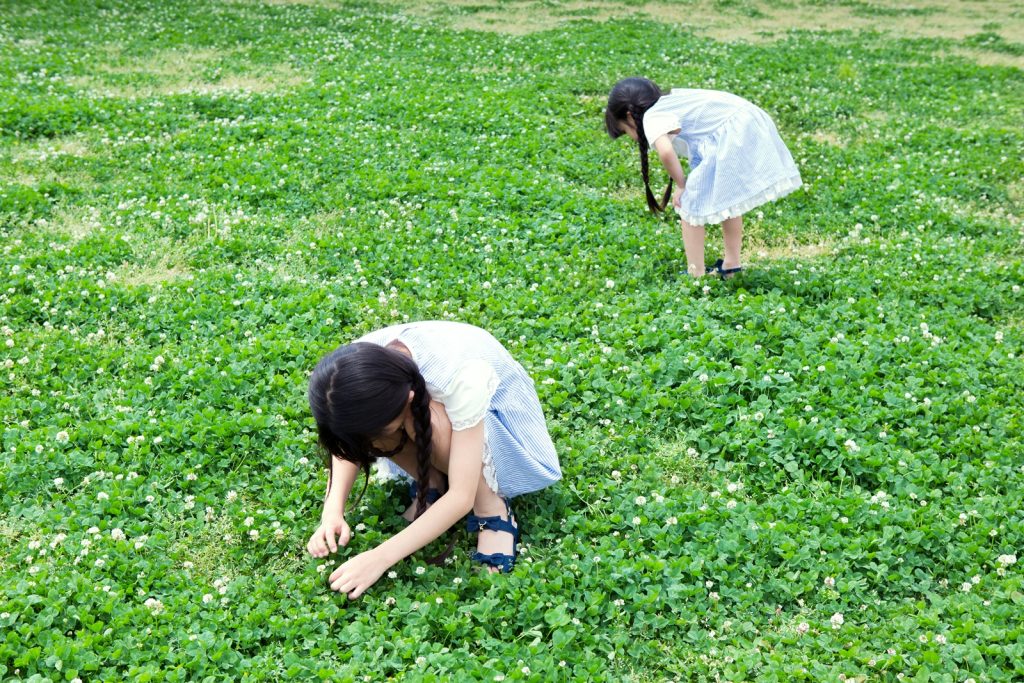
If you want to grow your own clover patch, or an entire clover lawn, seeds can be purchased online or at farm or garden stores that sell bulk white Dutch clover seed.
Learn More About Clover Plants
While you are searching for flowers to make your clover flower chain, be sure to keep an eye out for four-leaf clovers, often called “lucky” shamrocks. These days several plants are commonly marketed as shamrocks, but they are quite different plants. To learn more about shamrocks, explore our article that explains the Difference Between Shamrock, Clover, and Oxalis Plants.




0 Comments