Gardening near a coastline brings both challenges and opportunities. A beach garden requires extra effort to deal with sandy soil and salty winds. But, with proper planning, all sorts of beautiful plants can thrive in coastal conditions.
Meanwhile, you can’t beat the peaceful feeling of a cozy outdoor space by the shore. Whether or not you’re close enough to the sea to smell the salty breeze or hear the crashing waves, a beach garden can help bring this ambiance to life.
Seaside gardening involves managing harsh coastal growing conditions, along with aesthetic considerations to capture that peaceful “beachy” vibe. To help you succeed on both fronts, here are a few planting strategies, plant suggestions, and design ideas for coastal gardening.
Coastal Gardening Challenges
Growing plants near a coast presents several challenges. These include:
Sandy soil: Sandy soil is nutrient-poor and fast-draining.
Salt: Gardens closer than 1,000 ft (300 m) from the ocean may be hit with a spray of salt that burns plant foliage and accumulates in the soil. Salty soil makes it harder for plant roots to take up water, leading to slow or stunted growth.
Wind: Strong coastal winds can knock plants over, dry them out, or erode the soil.
Storms: Coastal storms bring intense rain and wind that destroy young or fragile plantings.
Strategies for Growing Plants in Coastal Conditions
Coastal gardening requires a few key adjustments to combat the effects of sand, salt, and wind. Here are three helpful strategies: installing windbreaks, amending the soil, and growing plants in raised beds or containers.
Windbreaks
A good starting point for developing a beach garden is to install windbreaks along unprotected areas of the garden’s perimeter.
A windbreak filters and weakens wind so that vulnerable plants within the garden won’t be struck by harsh gusts. A living windbreak (a hedge) has the added benefit of stabilizing the soil and preventing erosion.
Here are three types of windbreaks to consider:
Fencing
A picket or slatted fence can be an effective, attractive windbreak. For small gardens, fencing is more space-efficient (thinner) than shrub hedging.
Hedging
A hedge is a living fence made of tightly spaced shrubs. A neatly-trimmed hedge forms an attractive, sturdy barrier that filters wind and stabilizes the soil. Shrubs to consider for a coastal garden hedge include blue holly, Siberian peashrub, shrubby cinquefoil, and firethorn.
Netting
For temporary protection, or to protect a coastal veggie garden where aesthetic appeal is not a priority, make a windbreak from stakes and agricultural netting, or a similar mesh product.
Note that a windbreak should be semi-permeable, filtering wind rather than blocking it entirely. If a windbreak is completely solid, it will redirect gusts into turbulent, destructive eddies.
Soil Amendment
Sandy soil lacks nutrients and dries out quickly. Before planting in a beach garden, it’s usually necessary to start by amending sandy soil to improve growing conditions. The best way to improve sandy soil is to add several inches of organic matter, such as bagged or homemade compost. Organic matter makes sandy soil more nutrient-rich and improves water retention.
Additionally, top off garden beds with a mulch layer. Mulch helps with weed suppression, water retention, and temperature regulation.
Raised Beds and Containers
If sandy soil is a major concern, use raised beds to enjoy greater control over your growing medium. After constructing a raised bed, you can fill it in with the exact soil mix your plants require without having to remove a large amount of earth from the ground.
Growing plants in pots or other containers is another option for managing the challenges of coastal gardening. Like with raised beds, container gardening provides total control over soil quality. Containers also offer the advantage of mobility, so that you can keep some plants outdoors during the summer and move them indoors in winter. Potted plants can also be moved to safety during coastal storms.
Beach Garden Plant Selection
As with any garden, choosing plants for a beach garden depends on the local climate. For example, a beach garden in Southern California has the benefit of mild winters, but may require drought-tolerant plantings.
Ideal beach garden plants vary from place to place, but the traits to look for are all-around hardiness, sandy soil tolerance, and salt tolerance.
Perennial Plants that Grow Well in Coastal Beach Gardens
Wormwood ‘Silver Brocade’ (Artemisia stelleriana)
‘Silver Brocade’ is an easy-care plant with silvery-gray foliage that stylishly accents other bright colors. Wonderfully textured leaves look great all season long. One of the best perennials for long-lasting interest. Excellent for use in difficult spots where nothing else can survive. Wonderful for mixed borders and rock gardens. Combines beautifully with small ornamental grasses.
Sea Holly (Eryngium planum)
A fabulous plant for bringing unique form, texture and glowing blue color to the garden. Better yet, Sea Holly is incredibly easy to grow and can stand up to heat, drought, wind and poor soil conditions. A perfect choice for the novice gardener or anyone who appreciates a low-maintenance garden. Excellent cut flowers for fresh or dried arrangements. Birds enjoy the seeds.
Sea Lavender (Limonium latifolium)
Sea lavender is one of the best selections for a cut-flower garden. The airy stems of tiny lavender flowers are a perfect filler for cut arrangements whether used fresh or harvested for dried arrangements. This is a low-maintenance plant that thrives in hot, dry locations. The loose flower sprays create an airy cloud of color in the garden. Ideal choice for beds, borders, and cutting gardens.
Switch Grass (Panicum virgatum)
Switch Grass is a North American native grass. It forms a dense clump with a narrow, upright habit that provides a strong vertical accent in the landscape. It grows in just about any type of soil, but prefers sandy loam. Several varieties are available offering a range of foliage and panicle colors from which to choose. Provides good winter cover for small mammals and nesting material for birds in the spring.
Gray santolina (or lavender cotton) is a low-growing, dense, aromatic shrub native to dry, rocky regions of the Mediterranean. It is extremely drought tolerant once established. Santolina may be pruned heavily, and is a good choice for low hedges and knot gardens. Perennial in regions with mild winters. Plant near walkways, decks and patios where scent can be enjoyed.
Statice, Sea Lavender (Limonium perezii)
One of the best flowers for adding lasting color to hot, dry situations. Clusters of small papery flowers on sturdy stems bloom all summer long. Salt tolerant and deer resistant. Ideal choice for beds, borders, and cutting gardens. Nice for larger patio containers. Excellent cut flowers for fresh or dried arrangements.
This is a plant found naturally along beaches and dune areas, but it will grow just as well in any garden. It’s a tough plant tolerant to any type of soil, drought conditions and salts from sea spray. The vibrant yellow flowers are very attractive to butterflies. This is an ideal choice for beds, borders, and cutting gardens. Birds enjoy the seeds.
Silene, Sea Pink, Sea Campion (Silene maritima)
A mat forming, semi-evergreen perennial with gray-green leaves and white blooms in the straight species. Some named varieties have variegated foliage and some have pink blooms. This sea coast native thrives in sunny, well-drained sites. Perfectly sized for rock gardens and border fronts. Combines beautifully with small ornamental grasses.
Daylily (Hemerocallis hybrid)
Daylilies are tough and adaptable, yet their form is elegant and refined. Each trumpet-like bloom of a daylily only lasts for one day. Most varieties offer up daily blooms for several weeks and some rebloom throughout the entire summer. Plant a mix of daylilies with different colors and bloom times to assure a colorful garden for months. Combines beautifully with ornamental grasses.
Cooper’s Ice Plant (Delosperma cooperi)
This spreading selection forms a low carpet of succulent foliage. The leaves are speckled with glistening dots that look like tiny ice crystals. Brilliant purple, daisy-like flowers bloom from mid-to-late summer. Perfectly sized for rock gardens and border fronts. A reliable groundcover for any location. Tumbles beautifully over rocks, slopes, and banks.
Armeria, Sea Thrift (Armeria maritima)
Globe shaped clusters of dainty blooms sway like sailors above a sea of grassy foliage. A fun, colorful, easy-care choice for hot, dry locations. Sea Thrift is an excellent companion to fleshy-leaved succulents. Perfectly sized for rock gardens and border fronts. Perfect for all kinds of containers. Combines beautifully with small ornamental grasses.
Fleabane, Beach Aster (Erigeron glaucus)
A bushy perennial that sports fringy, daisy-like blooms over a long period. This salt-tolerant species is also known as beach aster and hails from the Western sea coasts of the U.S. Named varieties offer a range of bloom colors and several dwarf options. A dependable choice for a mixed border or rock garden. Perfect for all kinds of containers.
No results found.
Shrubs and Small Trees for Coastal Beach Gardens
Sea Myrtle, Groundsel Bush (Baccharis halimifolia)
Sea myrtle is a rugged multi-branched deciduous shrub with thick, waxy, oval-shaped leaves. This is a dioecious species that requires a male and a female plant to produce seeds. They can be found growing in the coastal regions of the U.S., Canada, and Mexico where they tolerate poor soils, salt spray, heat, and windy conditions. White flowers appear in fall that are followed by fluffy seed heads that disperse their seeds into the wind. A good selection for naturalizing along water, such as a pond, stream, seaside, or even a drainage ditch.
Sea Grape (Coccoloba uvifera)
Sea grape is a vigorous, heat, drought, and salt-tolerant selection can be grown as a shrub or small tree. Perfect for sea-side landscapes. Fruiting occurs on female trees from spring to autumn. Produces tiny flowers followed by clusters of “grapes” that mature to dark purple. Fruits are edible and birds love them! Ideal for borders, hedges or as a specimen plant. Best planted in groups. Great for privacy screening on decks or blocking unsightly views.
Aloe Yucca, Spanish Dagger (Yucca aloifolia)
Spiky clumps of narrow foliage add great texture and form to the landscape. This is a rugged plant, well suited for harsh, dry conditions where other plants might fail. Dense spikes of white flowers are followed by small fruits that provide a nice treat for birds. Through history the fibrous leaves were used to make rope and string. Perfect for challenging hot locations near pavement or between building foundations and walks. An excellent specimen, foundation, or border plant.
Rugosa Rose, Japanese Rose (Rosa rugosa)
Incredibly vigorous Asian native. Rugosa roses are exceptionally cold hardy and salt tolerant, whether from roadside snow melt or sea spray. They tolerate poor soils and polluted conditions. Produces edible fruits called “hips” that may be pruned or left for their ornamental appeal. Hips are popular for making tea and jelly. An excellent specimen, foundation, or border plant. Beautiful grouped or massed in a shrub border.
Bougainvillea (Bougainvillea species)
This South American native is easy to grow and offers a spectacular display of color all season long. In addition to adding a lush, tropical feel to the landscape, bougainvillea is drought tolerant, salt tolerant, and thrives in just about any well-drained soil. The vines can be pruned to maintain desired size. Beautiful trained to fences, posts, latticework and trellises. Nice for larger patio containers.
Heather, Heath (Erica species)
Heather becomes a haze of color when its multitudes of tiny flowers bloom! A tough plant with a delicate appearance. Provides nice contrast when planted with companions of broad-leaf or vertical growth habit. Excellent for use in difficult spots where nothing else can survive. Perfectly sized for rock gardens and border fronts. A reliable groundcover for any location.
Firethorn Hybrid (Pyracantha hybrid)
Pyracantha are spiny, glossy-leaved evergreens excellent as background, companion and hedging plants. Their abundance of colorful berry clusters in autumn brings a boost to the fading landscape. Depending on variety, the berries will be orange, red or yellow and are preceded by white blooms. A great choice for foundation plantings or hedges. Excellent for planting along fences and walls. Great for privacy screening or blocking unsightly views.
Bird cherry is a lovely flowering tree native to northern regions of Europe and Asia where it’s one of the first trees to leaf out in the spring. Leaves emerge first followed by pendant clusters of tiny, but fragrant, white blooms. Named varieties offer some variation from green leaves and white blooms, as well as different overall tree form. Provides instant shade and structure to the landscape.
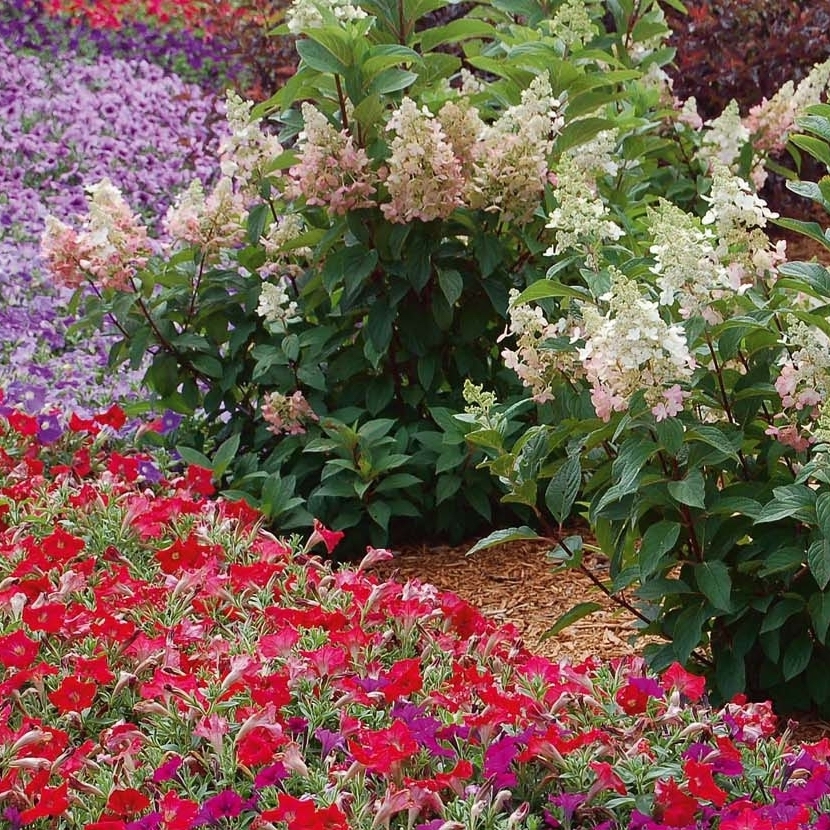
Hydrangea macrophylla all have large, attractive leaves but vary in flower clusters. Some varieties have their blooms grouped in flat, lace-like arrangements earning them the alternate common name of Lacecap Hydrangea. Others of the macrophylla species are known as Mopheads for their more rounded flower clusters. Ideal for borders, hedges or foundation planting. Excellent for planting along fences and walls.
No results found.
Beach Garden Design Ideas
Coastal gardens are often less lush and colorful than inland gardens. However, the “shoreline simplicity” look offers its own peaceful, windswept beauty. This aesthetic emphasizes the thoughtful use of open space and soft colors, including complementary shades of blue, green, gray, tan, and white.
Planning begins with choosing plants that thrive in coastal conditions, then arranging plantings for weather resilience.
First, plan the perimeter and the groundcover:
Install hedging or fencing around the perimeter to filter wind and stabilize the soil.
Plant hardy native groundcover or artificial groundcover (e.g. gravel) to fill in open areas around beds.
Next, plan your garden beds with consideration to wind and soil conditions. Amend soil thoroughly before planting and put the most sensitive plants in areas that are best-protected against harsh winds.
Finish off your coastal aesthetic with classic “beachy” elements such as:
Pebble mulch for potted plants or garden areas.
Artistic driftwood, stones or shells.
Beach-themed seating, such as a hammock, stone bench, or beach chairs.
Props or outdoor artwork with nautical or beach themes.
Water elements, such as a pond, fountain, or bird bath.
More Ideas for Coastal Garden Plants
In a minimalist beach garden, a few small, simple plantings can make a major contribution to the space’s look and feel.
If you’re looking for attractive, low-maintenance plants that can withstand salty, sandy conditions, succulents might be the answer. Find tips and species suggestions in our guide: How to Grow Succulents Outdoors.
Ready to get your yard buzzing? Learn more about the ideal habitats for bees along with a list of 12 high-pollen flowers guaranteed to attract bees to your garden!
We use cookies to ensure that we give you the best experience on our website. If you continue to use this site we will assume that you are happy with it.





0 Comments