Versatile Dogwoods – Trees, Shrubs, Groundcover

Flowering dogwood branch covered with white flowers-Cornus florida.
My Garden Life
December 2, 2024
Table of Contents

By Kelly Miller

Dogwoods are trees, shrubs, and even groundcover plants in the Cornus genus. Dogwoods are known for providing year-round beauty, with grand blooms in the spring and colorful foliage in the summer and fall. Some dogwoods are even gorgeous in the dead of winter, thanks to a fiery red mass of stems and branches.

The dogwood has been named “Shrub of the Year” by the National Garden Bureau for 2025. This organization recognizes the beauty, color, and versatility of the many dogwood species that are available for home landscaping.

Let’s explore the basics of dogwood classification, growing requirements, and landscape benefits. We’ll also identify native dogwood tree, shrub, and groundcover species that you might like to add to your lawn or garden.

Are Dogwoods Trees or Shrubs?

There’s no scientific distinction between trees and shrubs. The unofficial criteria for telling one from the other include:

  • Shrubs grow up to 13 feet (4 m) tall, while trees grow taller
  • Shrubs have multiple woody stems, while a tree has a single trunk

These aren’t hard-and-fast rules, but they’re helpful indicators. Using these criteria, some dogwoods are trees while others are shrubs.

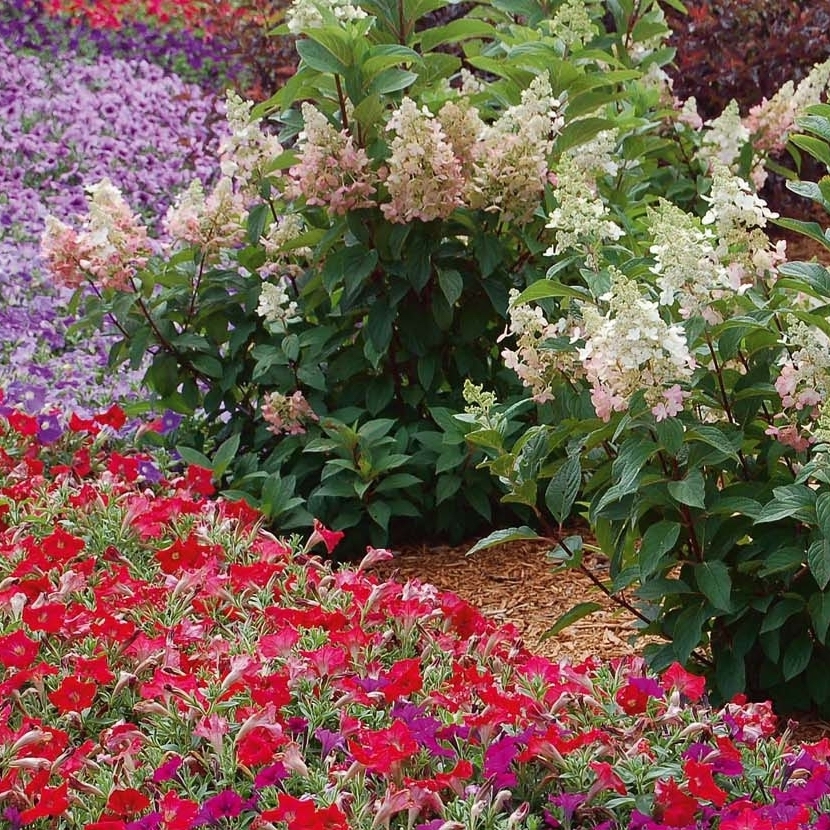
A beautiful green and white variegated dogwood in a garden border with flowering plants -Cornus alba elegantissima.

9 Dogwoods Native to North America

There are between 50–60 dogwood species in the Cornus genus. Dogwood species native to North America include:

Blackfruit Dogwood, Miner’s Dogwood (Cornus sessilis)

Blackfruit Dogwood, Miner’s Dogwood (Cornus sessilis)

Blackfruit dogwood is a deciduous tree native to western North America, and particularly plentiful in California. This shrub can usually be found growing along stream banks in the wild. Produces small clusters of yellowish-white flowers in the spring followed by berries that ripen from red to black. The leaves turn red in the fall. Birds will love the berries!
Pacific Dogwood (Cornus nuttallii)

Pacific Dogwood (Cornus nuttallii)

The Pacific dogwood is a small deciduous tree, native to regions from British Columbia to southern California. It has medium-green leaves that turn red in the fall. Tiny purplish-green flowers surrounded by showy white, or lightly pink-tinged bracts appear in late spring. Flowers are followed by orange-red berries.
Swamp Dogwood (Cornus foemina)

Swamp Dogwood (Cornus foemina)

Swamp dogwood is a North American native tree that can be found growing wild in moist woods, along streams, or in swamps in the eastern United States. Plants produce clusters of small white flowers in spring that are followed by berries that eventually mature to a beautiful blue-black shade. The berries provide food for birds and other wildlife.
Roughleaf Dogwood (Cornus drummondii)

Roughleaf Dogwood (Cornus drummondii)

Roughleaf dogwood is deciduous shrub native to a large area of North America, from Ontario south to Louisiana and Texas. This dogwood species produces showy clusters of small white flowers in the spring followed by interesting white berries. In the wild roughleaf dogwood can be found growing in forests, prairies, along streambanks, and in other marshy areas.
Gray Dogwood (Cornus racemosa)

Gray Dogwood (Cornus racemosa)

Gray dogwood is a suckering, multi-stemmed deciduous shrub. New growth is reddish purple and provides contrast against older gray stems. White flowers are followed by decorative white fruit. Ideal for specimen, foundations, and mass plantings. Beautiful when combined with evergreens in winter gardens.
Pagoda Dogwood (Cornus alternifolia)

Pagoda Dogwood (Cornus alternifolia)

The pagoda dogwood is a graceful small tree with lovely, deeply veined foliage, clusters of small white flowers in spring, and dark bluish-black berries in summer. The fruits are a welcome treat for birds. This tree has a distinctly horizontal branching habit that gives it a sculptural effect in the landscape.
Silky Dogwood (Cornus amomum)

Silky Dogwood (Cornus amomum)

Silky dogwood is a durable North American native shrub with lovely, deeply veined foliage. Produces white flowers followed by small porcelain-blue berries. Fruit and stems are an important food source for wild life. Performs well in wet areas where other plants may struggle. Appropriate near water and in damp woodland settings. Beautiful grouped or massed in a shrub border. Perfect for use in swampy areas and areas around ponds, lakes and streams.
Red Twig Dogwood, Red Osier Dogwood (Cornus sericea)

Red Twig Dogwood, Red Osier Dogwood (Cornus sericea)

Spring blooms grace the lush foliage and are followed by tiny fruits in summer. Varieties with variegated foliage add more impact. Autumn color from the leaves gives way to bright red or yellow stems, depending on variety chosen, for a stunning winter display. Also known as Cornus stolonifera. Ideal for specimen, foundations, and mass plantings. Beautiful when combined with evergreens in winter gardens.
Flowering Dogwood (Cornus florida)

Flowering Dogwood (Cornus florida)

This native of Eastern North America offers year ’round appeal and ease of care. Large spring blooms are followed by tiny berries that attract an array of birds. The show transitions with red hued autumn foliage yielding to a winter display of graceful, branching stems. A classic favorite for landscape focal points. Makes a breathtaking specimen plant. Useful in small gardens where season long interest is needed.
No results found.

Other dogwood species are native to Europe and Asia. Some of these, such as Siberian dogwood (Cornus alba) have become popular landscaping plants in North America.

Most non-native dogwoods are not invasive. However, Chinese Dogwood, (Cornus kousa), also known as Korean Dogwood, has recently been recognized as an invasive species in some areas. Chinese dogwood may spread fungal disease to other trees. This species is also unhelpful to local wildlife, since its large berries are inedible for North American birds.

Close up of a Cornus kousa, Chinese dogwood, branch with flowers.

Three Types of Dogwoods: Trees, Shrubs, and Groundcover

Dogwood Trees

In North America, when someone mentions a dogwood tree, they’re most often referring to flowering dogwood (Cornus florida, sometimes classified as Benthamidia florida). These attractive trees put on a spectacular display in the spring with their abundance of white, pink, or red flowers. The flowers are followed by red berries in summer.

Flowering dogwood is native to the Eastern US, from Canada to Florida. It’s a popular landscaping tree throughout its native range (zones 5–8), especially in the Southeast. Flowering dogwood is the State Tree of Virginia and Missouri.

A white flowering dogwood in a spring flower border in the front of a house.

Flowering dogwood grows to a mature height of 15–30 feet (4.5–9 m). It’s low-maintenance and slow-growing. Flowering dogwood is perfect as a single specimen in a small lawn, or for adding shade around a garden’s sitting area.

3 Popular Flowering Dogwood Varieties

Flowering Dogwood ‘American Beauty Red’ (Cornus florida var. rubra)

Flowering Dogwood ‘American Beauty Red’ (Cornus florida var. rubra)

A refreshing burst of color in the early spring! The ‘American Beauty Red’ dogwood variety is a decorative deciduous tree that produces an amazing display of tiny flowers surrounded by big, deep rose-pink flower bracts. Flowers are followed by clusters of small red, berry-like fruits that are a treat for many bird species. Foliage turns beautiful shades of purple to red in autumn.
Flowering Dogwood ‘Cherokee Princess’ (Cornus florida)

Flowering Dogwood ‘Cherokee Princess’ (Cornus florida)

‘Cherokee Princess’ is rated as one of the best flowering deciduous trees! The branches are covered with flowers in early spring set off by their showy white flower bracts. The foliage has a reddish tinge when it first emerges in spring and turns red to purple-red in autumn. Dogwoods are a classic favorite for landscape focal points. Makes a breathtaking specimen plant. Useful in small gardens where season long interest is needed.
Flowering Dogwood ‘Cherokee Chief’ (Cornus florida)

Flowering Dogwood ‘Cherokee Chief’ (Cornus florida)

‘Cherokee Chief’ is a very popular flowering deciduous tree with bright ruby-red flowers. The foliage has a reddish tinge when it first emerges in spring. Leaves turn red to purple-purple red in autumn. Dogwoods are a classic favorite for landscape focal points. Makes a breathtaking specimen plant. Useful in small gardens where season long interest is needed.
No results found.

Growing Dogwood Trees

Flowering dogwood and other dogwood trees are easy to grow in a wide range of regions and conditions. Best practices for growing dogwoods include:

  • Plant in spring or fall, or only in the spring in colder climates
  • Plant in a well-drained site
  • Maintain a low layer of mulch around the base of the tree
  • Provide occasional deep watering during dry weather

Popular dogwoods have been bred to form balanced, attractive shapes. Therefore, heavy pruning isn’t required, other than the removal of dead or damaged branches. However, dogwoods are vulnerable to some diseases and pests, especially fungal diseases. So, it’s important to keep an eye out for warning signs such as discolored leaves or cankers on the trunk (learn more here).

A white dogwood tree in a perennial garden border.

Growing Dogwood Shrubs

Dogwood shrubs grow to mature heights of 3–15 feet (0.9–4.5 m). Like dogwood trees, dogwood shrubs are low-maintenance and produce lovely spring blooms. Shrub-type dogwoods are particularly attractive in winter, when many cultivars show off a mass of colorful stems.

Popular dogwood shrub species include Cornus alba, Cornus racemosa, and Cornus sericea. Cornus sericea is known as red twig dogwood. Red twig dogwoods are known for their beautiful red (or sometimes yellow) stems.

Cornus sericea red-twig dogwood shrubs in winter displaying their vibrant red branches.

3 Popular Cornus sericea Varieties

Red Twig Dogwood, Red Osier Dogwood ‘Isanti’ (Cornus sericea)

Red Twig Dogwood, Red Osier Dogwood ‘Isanti’ (Cornus sericea)

A compact variety well-suited to mixed borders or small spaces. Produces a dense mass of foliage and clusters of small flowers in spring. Blooms are followed by white berries in summer and fall brings a blaze of bright red foliage. This shrub is especially prized for its brilliant red stems that add a burst of color to dreary winter landscapes. Very tolerant of wet soil and an excellent choice for naturalizing along streams, ponds, or rain gardens.
Red Twig Dogwood, Red Osier Dogwood ‘Cardinal’ (Cornus sericea)

Red Twig Dogwood, Red Osier Dogwood ‘Cardinal’ (Cornus sericea)

‘Cardinal’ dogwood is a vigorous suckering shrub. Its appealing red stems give needed color to dull winter landscapes. White flowers are followed by decorative white fruit. This is a low-maintenance selection that requires little attention. Ideal for specimen, foundations, and mass plantings. Beautiful when combined with evergreens in winter gardens.
Yellow Twig Dogwood ‘Flaviramea’ (Cornus sericea)

Yellow Twig Dogwood ‘Flaviramea’ (Cornus sericea)

Yellow twig dogwood is a fast growing, vigorous selection. Dark green leaves turn red in fall. The stunning yellow stems are a real standout in winter when framed by snow. Thrives in constantly wet areas where most plants would fail. Ideal for specimen, foundations, and mass plantings. Creates a beautiful color contrast when combined with evergreens in winter gardens.
No results found.

Using Dogwood Shrubs in the Landscape

Different dogwood shrubs grow well throughout most of North America (zones 2–8). You can grow them in the ground or in pots. It’s also easy to propagate new dogwood shrubs from cuttings.

Dogwood shrubs can be used along borders, as privacy screens, or as featured plants in woodland garden beds. The benefits of these versatile shrubs include year-round color, flowers for pollinators, and berries for birds.

Close up of the white berries on red stems on a gray dogwood - Cornus racemosa.

Dogwood Groundcover

Bunchberry (Cornus canadensis) is an oddity in the Cornus genus. While most dogwoods are trees or shrubs, bunchberry is a creeping perennial that only grows around 8” (20 cm) tall. Native to the Northern US and Canada, bunchberry is an excellent native groundcover option in Northern zones or mountainous regions.

A mass of bunchberry growing on a forest floor.

Like larger dogwoods, bunchberry offers multi-season appeal. Its broad, dark leaves frame lovely white flowers that look just like those found on dogwood trees and shrubs. In late summer, bunchberry plants produce small red berries that are edible raw or cooked. These berries are rich in pectin and can be added to jams and jellies.

Growing Shrubs and Small Trees That Don’t Take up Too Much Space

If you want to add a colorful focal point to a small lawn, dogwood shrubs and trees are an excellent option. Looking for more ideas? Try out our recommendations for small yard trees and decorative shrubs you can grow in pots.

A brick two-story home with small ornamental landscape trees including dogwood and Japanese maple.

0 Comments

Submit a Comment

Your email address will not be published. Required fields are marked *

Related Posts

6 Signs of Potentially Hazardous Trees

6 Signs of Potentially Hazardous Trees

Find out what symptoms show a tree might be a safety hazard. Checking the trees in your yard means you have a better chance of preserving them.
Invasive species in the U.S. – 5 Insect Pests That Damage Trees

Invasive species in the U.S. – 5 Insect Pests That Damage Trees

There are many invasive insect species in the U.S. that damage trees. Their impacts are widespread. Let's look at five of the most destructive of these pests, the damage they do and what, if anything, we can do to stop them.
Top 10 Trees and Shrubs for Great Autumn Color

Top 10 Trees and Shrubs for Great Autumn Color

A choice selection of easy-care trees and shrubs that will add brilliant color to your landscape through the autumn season.
No results found.

Related Posts

Invasive species in the U.S. – 5 Insect Pests That Damage Trees

Invasive species in the U.S. – 5 Insect Pests That Damage Trees

How to Plant a Tree

How to Plant a Tree

Guide to Growing Persimmons

Guide to Growing Persimmons

No results found.
frost map with dates

Frost Map with Dates

USDA zone finder with zip code search and maps

USDA Zone Finder

plant library

Plant Library

Save plants to your personal library

Join My Garden Club to access more features

Already a member?
Log in now

Pin It on Pinterest

Share This

Share this post with your friends!