

By Kelly Miller
Flowers that reseed, or self-seed, are those that drop viable seeds onto the ground after they finish flowering. In the right conditions, these seeds can germinate and show up the following year as new flowers.
Dropping seeds is just one way that plants reproduce. New plants can also grow from separated roots, stems, or leaves, or by spreading spores, or with the help of seed distributors, such as birds. Meanwhile, many garden plants drop seeds onto the ground, but those seeds won’t be viable without human assistance.
Reseeding flowers are those that create new flowers without any help – just leave them alone, and they plant themselves! These flowers that pop up as offspring of last year’s blooms are known as volunteers.

Many popular garden flowers are self-sowing, including lots of annuals, perennials, and wildflowers. Here are a few of the most reliable reseeding flowers, followed by some tips on helping flowers to self-seed.
List of Flowers That Reseed Themselves
1. Calendula (Calendula officinalis)
Calendulas are yellow or orange annuals that look like fancy dandelions. They’re easy to grow from seed, and reseed reliably. Calendula are also tolerant of transplanting, so it’s easy to move them around after reseeding.

2. Coreopsis (Coreopsis species)
Coreopsis grows well in any sunny location, and reseeds abundantly to serve as a colorful groundcover. Coreopsis is native to North America and is commonly added to commercial wildflower seed mixes.

3. California Poppy (Eschscholzia californica)
California’s state flower is famous for coating hillsides in photogenic orange blooms. California poppies are heat-tolerant, drought-tolerant, and gorgeous. They reseed abundantly in garden beds or fields, but unwanted volunteers are easily pulled up.

4. Nasturtium (Tropaeolum majus)
Nasturtiums have many attractive qualities for gardeners. They grow well in poor soil, attract pollinators, smell nice, and some varieties bear trailing vines that look great in hanging baskets. In mild climates, Nasturtiums are reliable self-seeders.

5. Common Blanket Flower (Gaillardia grandiflora)
Blanket flowers are native to western North America, and reseed easily when grown in their native range. Blanket flowers are known for their striking color scheme: crimson red petals, tinged with yellow tips.

6. Sweet Alyssum (Lobularia maritima)
Sweet Alyssum is a low-growing, self-seeding annual that’s perfect in rock gardens or between pathway stones.

7. Black-Eyed Susan (Rudbeckia hirta)
Black-Eyed Susan is a cheerful yellow flower native to Eastern North America. Black-Eyed Susan’s self-sowing is assisted by birds that snack on the seeds. It’s a particular favorite of goldfinches.

8. Snapdragon (Antirrhinum majus)
Snapdragons are ornamental flowers known for their unique “mouth” that snaps open and closed like a dragon’s mouth. Snapdragons have long blooming seasons. Harvest some as cut flowers, and leave others in place to reseed the bed for next year.

9. Columbine (Aquilegia species)
Columbines (members of the Aquilegia genus) are known for reseeding easily. Columbine hybrid varieties are popular everywhere, while Rocky Mountain Columbine is a North American native and a great choice for high-altitude pollinator gardens.

10. Petunia (Petunia hybrid)
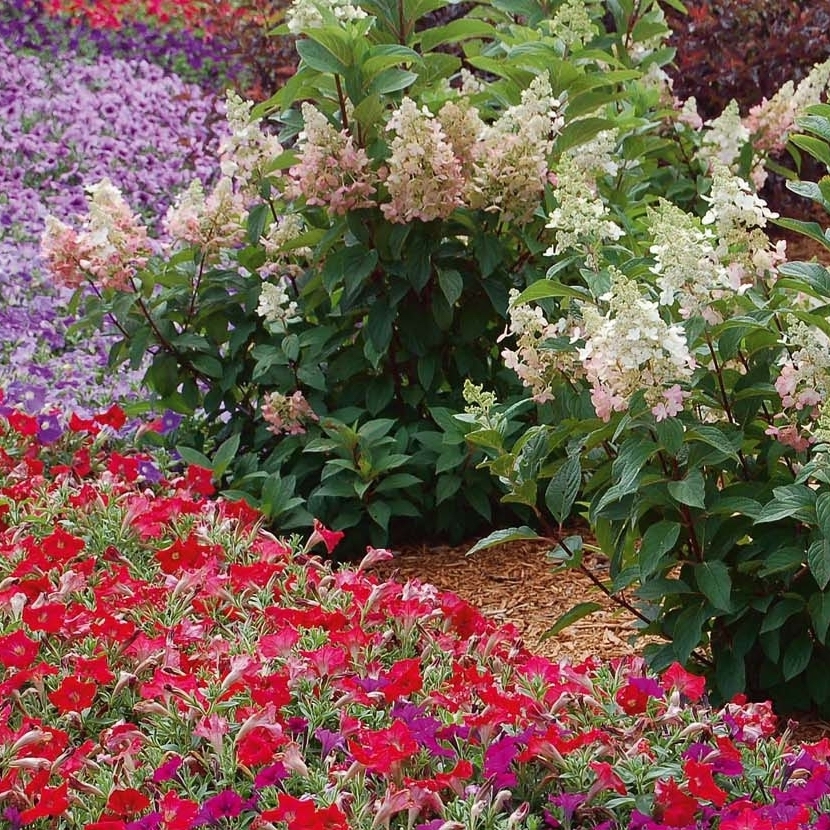
Petunias are among the most popular classic garden flowers. They’re small, but grow dense and colorful, making them a perfect option for containers and window boxes. Petunias reseed easily, however, because many petunias are hybrids, results can be unpredictable. Sometimes, the volunteers have different colors than their parent plants, leaving gardeners wondering where they came from.

11. Prairie Coneflower (Ratibida species)
Prairie coneflower is a North American native plant and a wonderfully durable perennial that tolerates poor soil, heat, and drought. These tall, yellow, self-seeding flowers are great additions to mini meadows and naturalized garden beds.

12. Forget-Me-Not (Myosotis sylvatica)
Forget-me-nots are a garden classic. Their dainty, true-blue flowers are some of the first flowers to appear in the spring making them great companions for spring flowering bulbs. They’re perfect for naturalizing in woodland settings where they can freely self-seed.

13. Cosmos (Cosmos bipinnatus)
Cosmos are favorites in cut flower gardens. They grow well almost anywhere, including in hot, dry locations with poor soil. Let cosmos reseed to gradually fill out a mixed border, where they’ll provide lots of colorful blooms for cut flower arrangements.

14. Garden Balsam, Touch-Me-Not (Impatiens balsamina)
Garden balsam is a true heirloom flower that has been cultivated in European gardens since at least the 1600s. The flowers resemble the lush blooms of a rose or camellia and this plant is sometimes called “rose balsam”. Generations of children have enjoyed the challenge of attempting to remove ripe seed pods from balsam plants without the pods “exploding” in a spray of seeds. Seeds can be propelled up to six feet away!

15. Everlasting Sweet Pea (Lathyrus latifolius)
One of the most fragrant garden flowers, sweet pea is a perennial that spreads by rhizomes but also readily reseeds itself. It produces typical-looking pea pods that eventually dry and split to release the seeds. Due to its sprawling habit, give it a space where it can grow freely or provide a trellis.

16. Borage (Borago officinalis)
Borage is a versatile annual plant that is often grown for its edible foliage and flowers but is just as useful for its ornamental beauty. Plants produce a clump of big, bold leaves with loose clusters of dainty, nodding, true-blue flowers held high above the foliage.

Tips for Growing Self-Seeding Flowers
When planting reseeding flowers, keep in mind that they may have a mind of their own. They might reseed, or not. Many flowers will reseed in mild climates, but not in colder zones. When flowers do reseed, they don’t grow in tidy rows—they might pop up densely, or scattered, or in other parts of the garden.
Some reseeding plants are aggressive spreaders. Before buying seeds or plants, always make sure they aren’t invasive in your area.
How to Help Encourage Flowers That Reseed
Reseeding is a natural process, but gardeners can help move things along. Here are a few tips for encouraging self-seeding.
- Stop deadheading at the end of the growing season. Deadheading (removing spent blooms) prevents a plant from producing seeds, forcing it to make new blooms instead. To let a plant reseed, stop deadheading once blooming slows down. This ensures that the final set of blooms will finish making seeds.

- Leave flowers in place, or distribute the seeds. Reseeding works best when flowers are simply left alone. But, if you want new flowers to grow in the same spot as the parent plant, shake the old flowers to help the seeds fall down in place. If you’d like new flowers somewhere else, harvest the seeds and sprinkle them in the desired location. Just know that you might be altering the plant’s natural timeline, which may affect the odds of germination.

- Don’t mulch. Air and light help seeds to germinate. Therefore, heavy mulching can kill seeds. This is especially true for many native plants, which are naturally adapted to growing from sprinkled, uncovered seeds. To encourage reseeding, mulch lightly or not at all.
- Watch for seedlings in the spring. In the spring, avoid heavy weeding, chemical use, or other activities that could harm flower seedlings. Depending on the species and climate, volunteers could pop up anytime between winter and summer. Learn to identify the seedlings of your self-sowing species, and weed carefully around them when they appear. Before transplanting seedlings, wait until they’re at least three inches (7.5 cm) tall.

Volunteer seedlings from heirloom flowers will resemble the parent plant. However, volunteers from hybrid flowers may have different colors and traits. Thus, a reseeding flower bed can be a fun source of surprises for gardeners.
Learn More About Sowing Seeds
Flowers that reseed themselves are delightful garden helpers. When encouraged and managed, self-seeding flowers can help fill up garden beds year after year with colorful blooms.
Learn more about sowing seeds in our guide on Starting Seeds Indoors vs. Sowing Seeds Directly Outdoors.




Hello.. looking for cosmos
Hi Carole,
Garden centers may still have cosmos seeds available in their seed racks. If not, there are many online sources. Try a browser search specifically for “buy cosmos seeds” and you should get many results for seed suppliers.